
Maiden's Tower Photos
What does the Maiden's Tower actually look like? These photos walk the visit in order — the moonlit postcard, the free show from the Salacak shore, the five-minute crossing, the terrace where the café sets its tables, then up through the tower itself — the spiral stair, the museum floors, the lantern gallery — and back out to the wide view with the old city stacked behind the islet. Every frame shows something you will see on an ordinary visit; inside the Maiden's Tower walks the same route room by room.
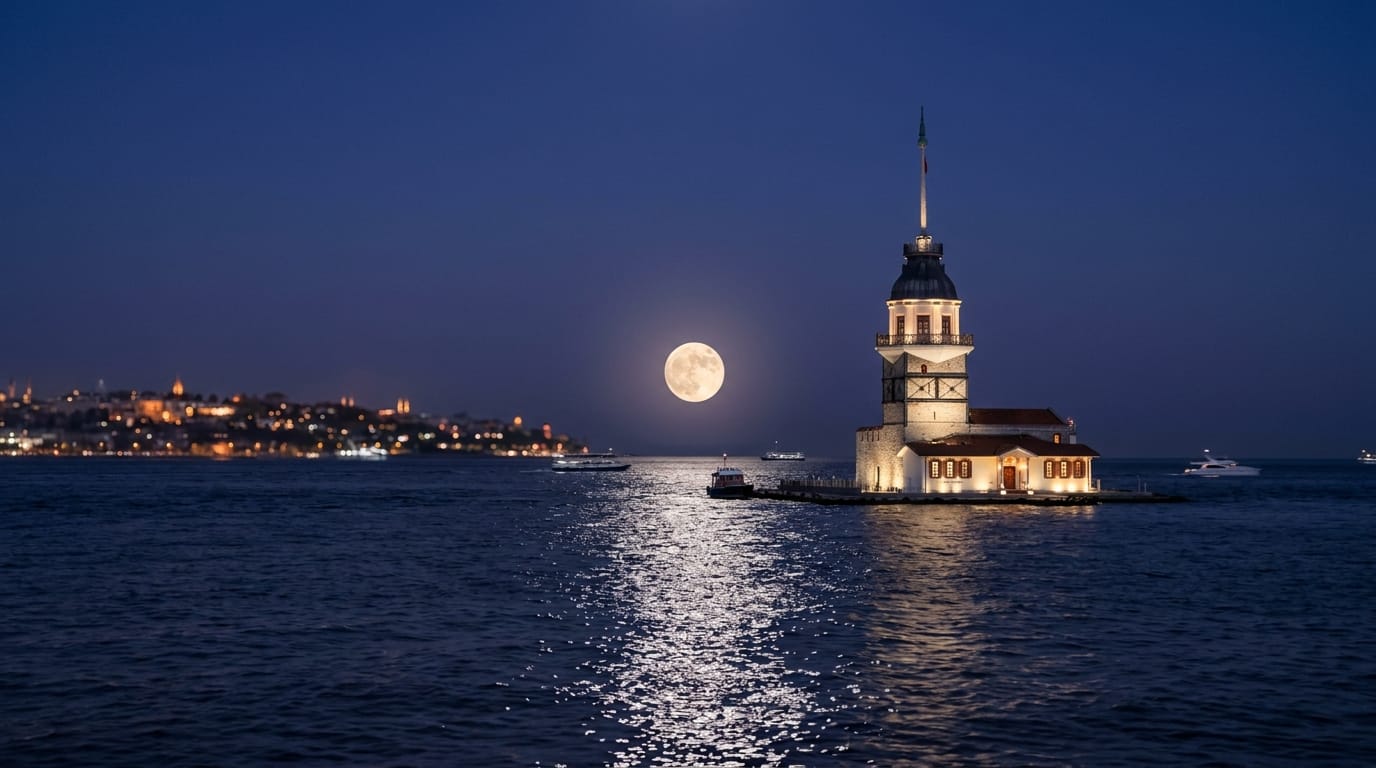
Moonrise over the tower
The Maiden's Tower at moonrise: the white 19th-century tower alone on its rock, the moon's path laid across the strait toward Salacak.
This is the tower the legends were written for — after dark, alone on the water, its lantern answering the moon. The moon rises over the Asian shore behind you as you look from Salacak, and on clear nights the silver path across the strait points straight at the islet. It is the image that made the tower Istanbul's shorthand for longing.
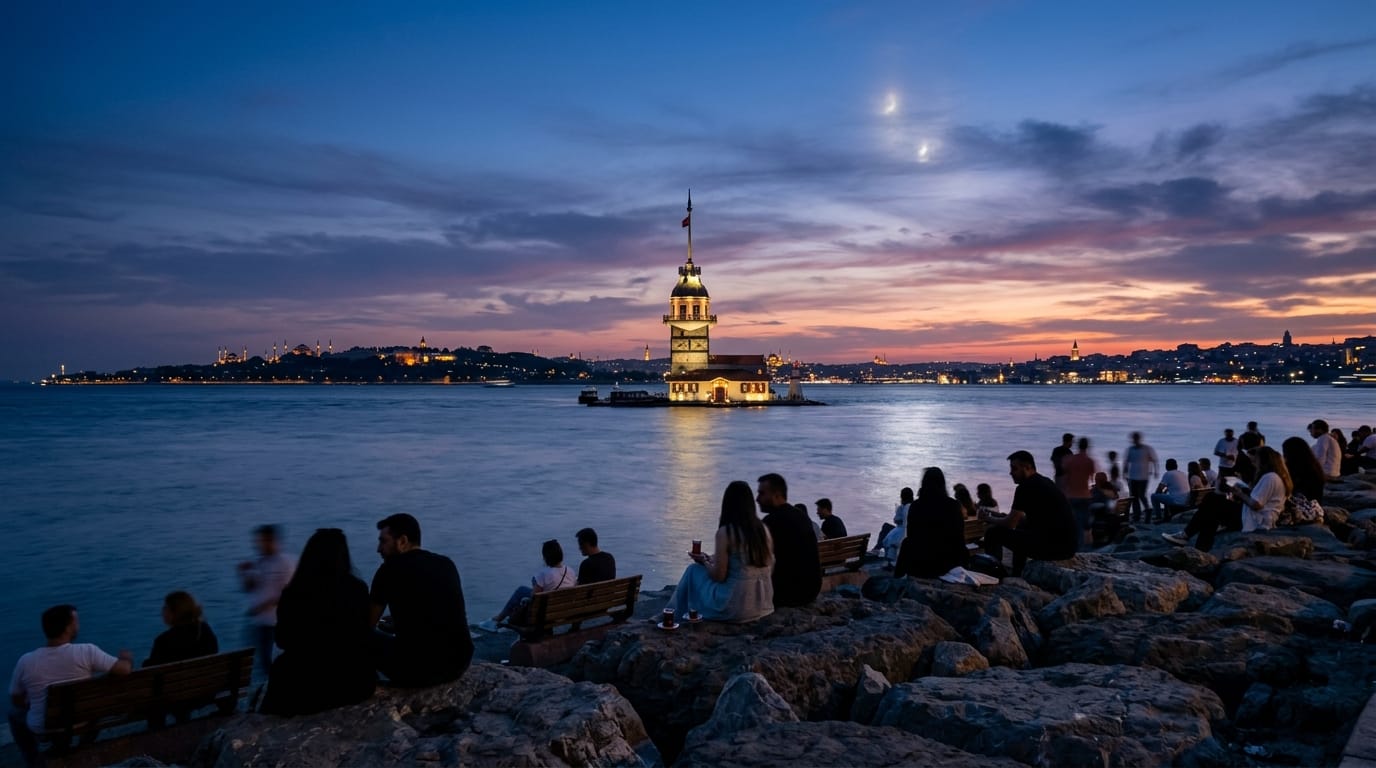
Sunset from the Salacak shore
The nightly show from the Salacak waterfront: the tower offshore, the old city dissolving into silhouette, and the whole neighbourhood out to watch.
The classic viewpoint costs nothing: the Salacak promenade faces the islet from about 200 metres, and an hour before sundown it fills with tea flasks, camera tripods and couples. The sun sets behind the European shore, backlighting the tower — then blue hour switches the lights on. Our sunset guide maps the exact spots.
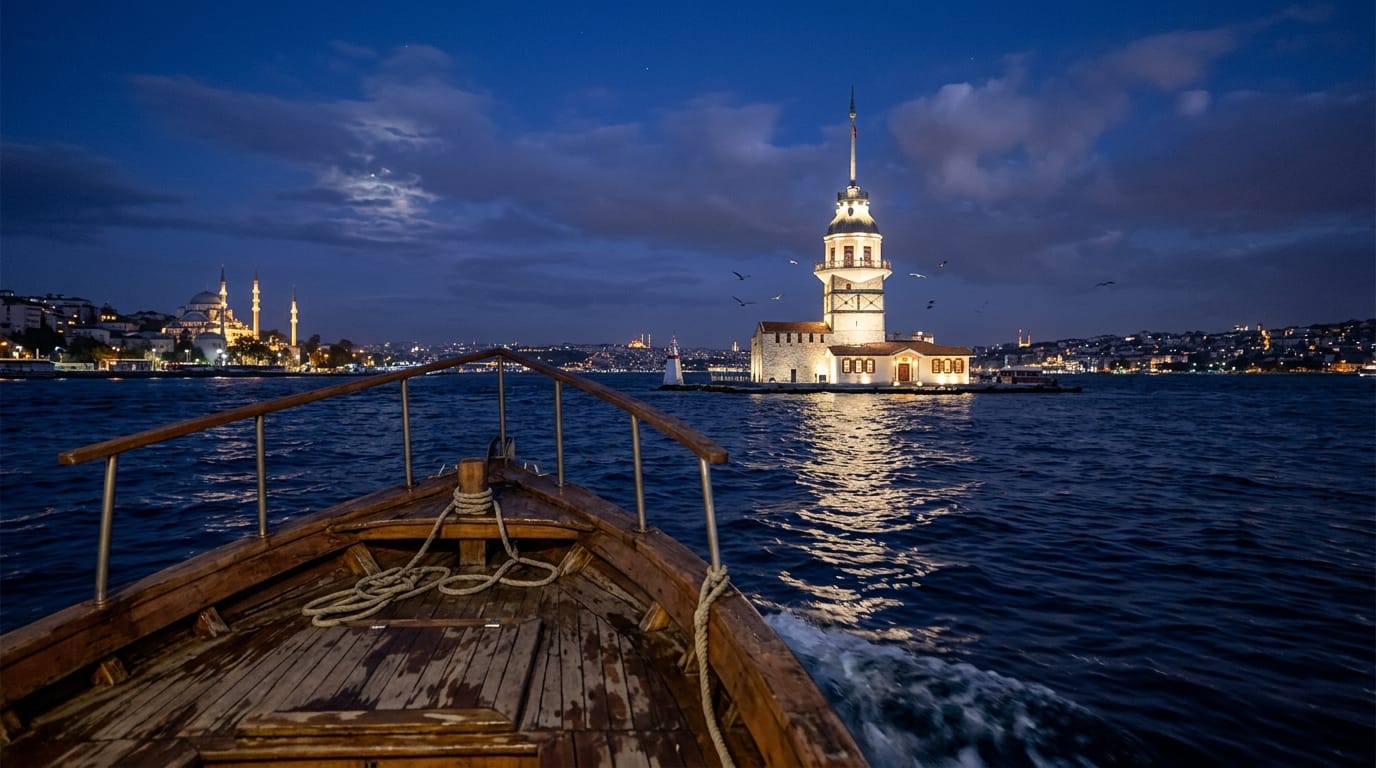
The crossing
Five minutes of sea: the shuttle boat from Salacak closes the 200 metres to the islet, the only way to arrive.
There is no bridge and no causeway — every visitor since Alcibiades has arrived by water, and the short ride is half the visit. Boats loop continuously through museum hours, gulls escort, and the tower does its trick of growing from a postcard into a building. The crossing is included with admission, so you board and go.
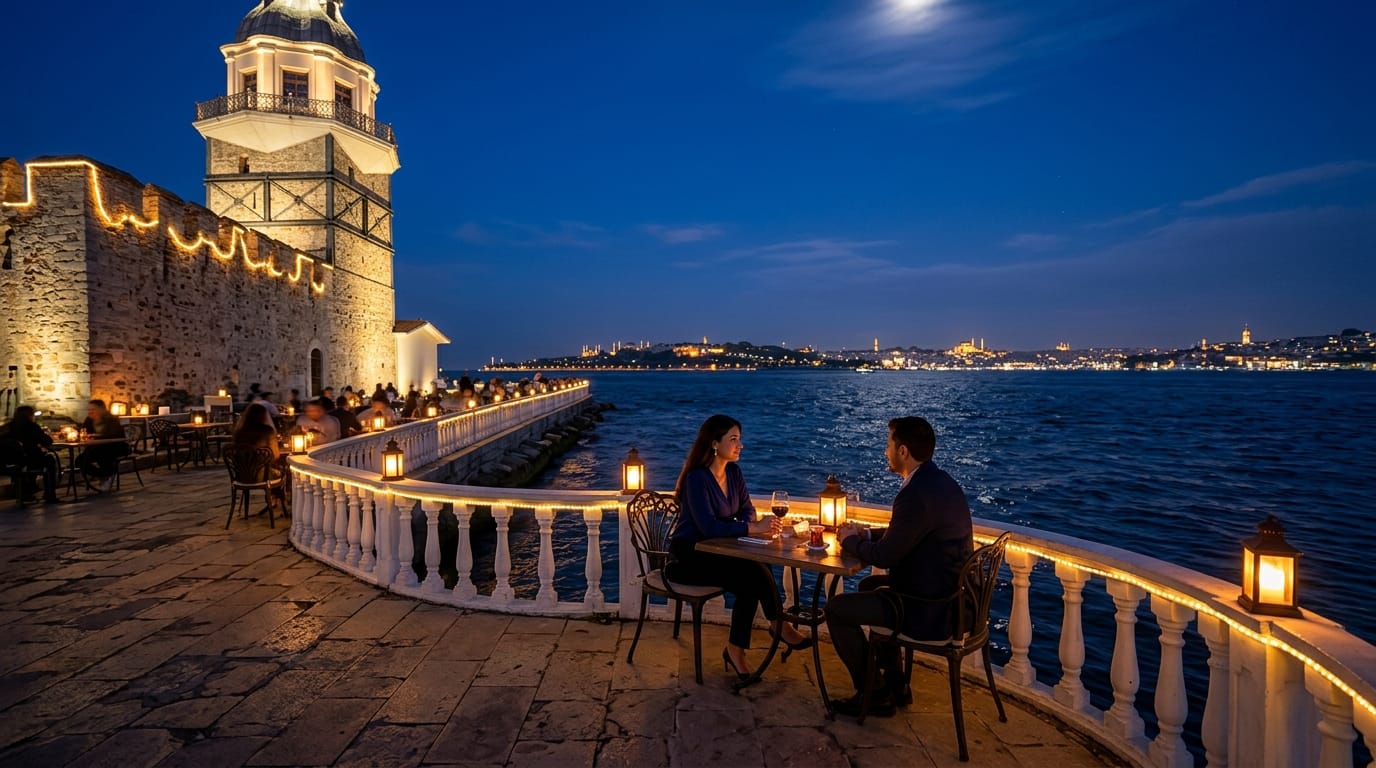
The terrace at the water's edge
The islet terrace and its café: lantern-lit tables along the balustrade, a few steps above the strait.
At sea level, the islet is a stone terrace wrapped around the tower — the daytime café pours tea and Turkish coffee here, and in the evening the restaurant service takes over the same stones. Inside, the museum floors climb to the lantern gallery; out here, you get the sound of the strait and the best-positioned table in the city.
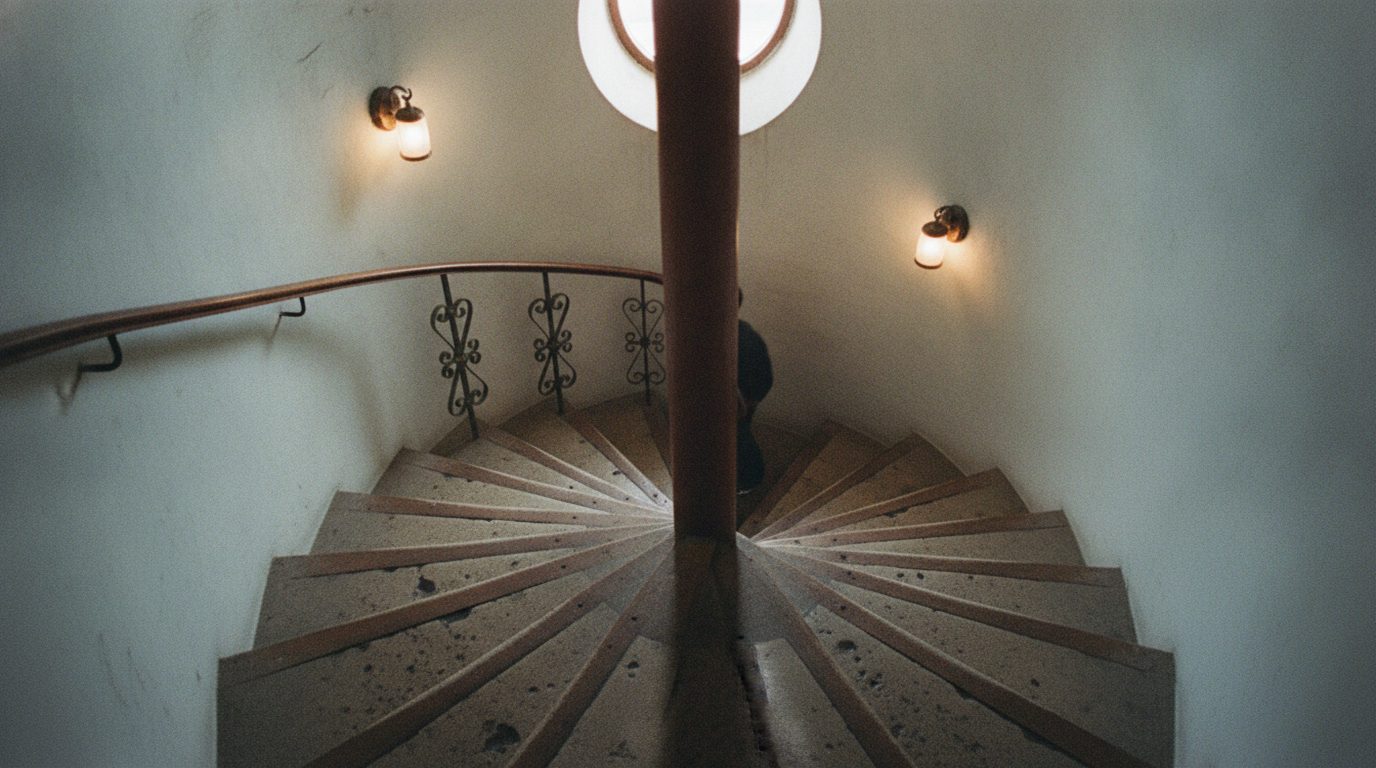
The spiral staircase
Looking down the historic spiral stair: stone treads, iron scrollwork and the round skylight drawing the eye upward.
Seen from above, the stair shows why the ascent is part of the visit, not just the way between rooms. Stone treads wind tightly around the central column, the wrought-iron balustrade softens the curve, and the wooden handrail has the sheen of long use. One practical point matters here: above the terrace level, the tower is reached by stairs only, so the upper floors are not step-free.
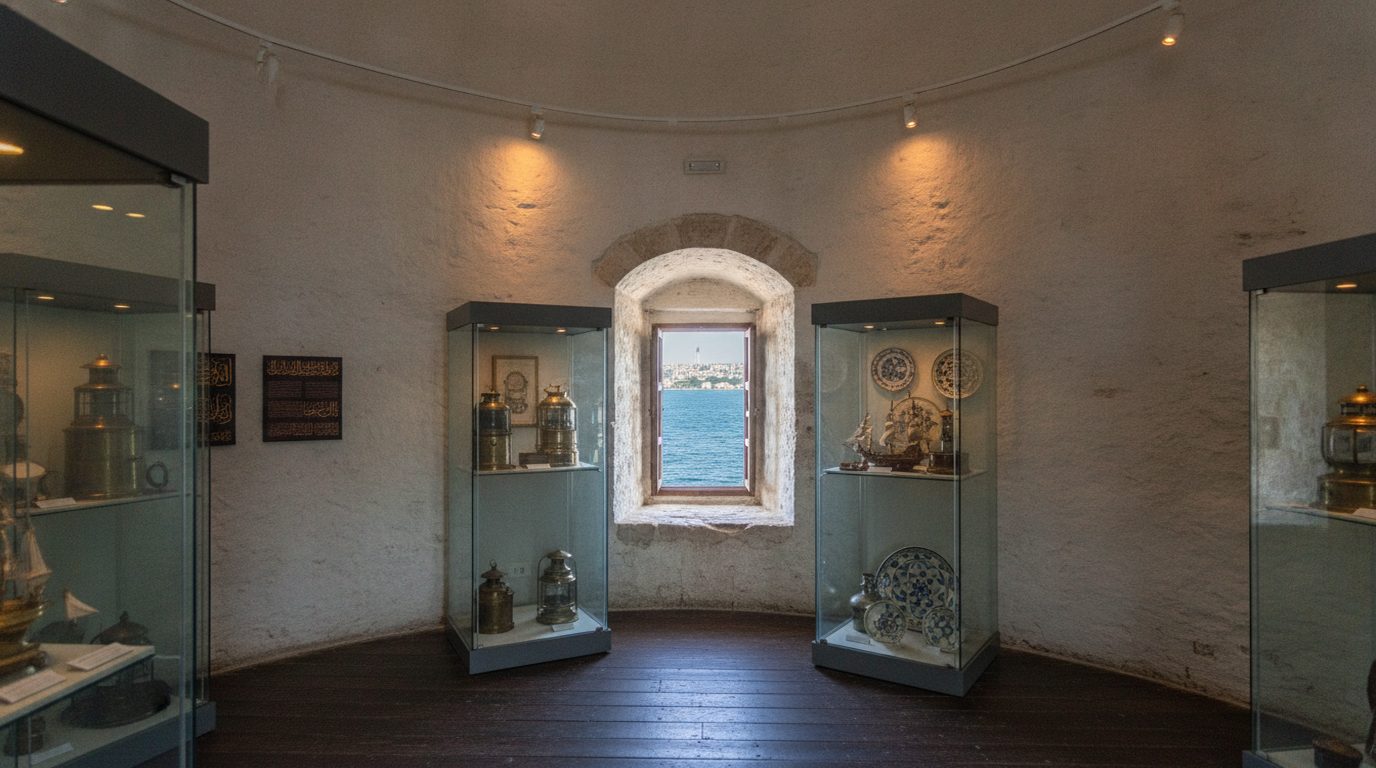
A museum room above the water
A whitewashed circular room pairs maritime display cases with a deep arched window towards Üsküdar and the Bosphorus.
This is the scale of the museum inside the tower: circular, whitewashed, close to the water, with cases that lean towards maritime life rather than spectacle. Old lanterns, lighthouse models, ship models and ceramics sit against the curve of the wall, while the deep arched window keeps returning your eye to the Bosphorus. The museum reopened in May 2023 after the 2021–2023 restoration.
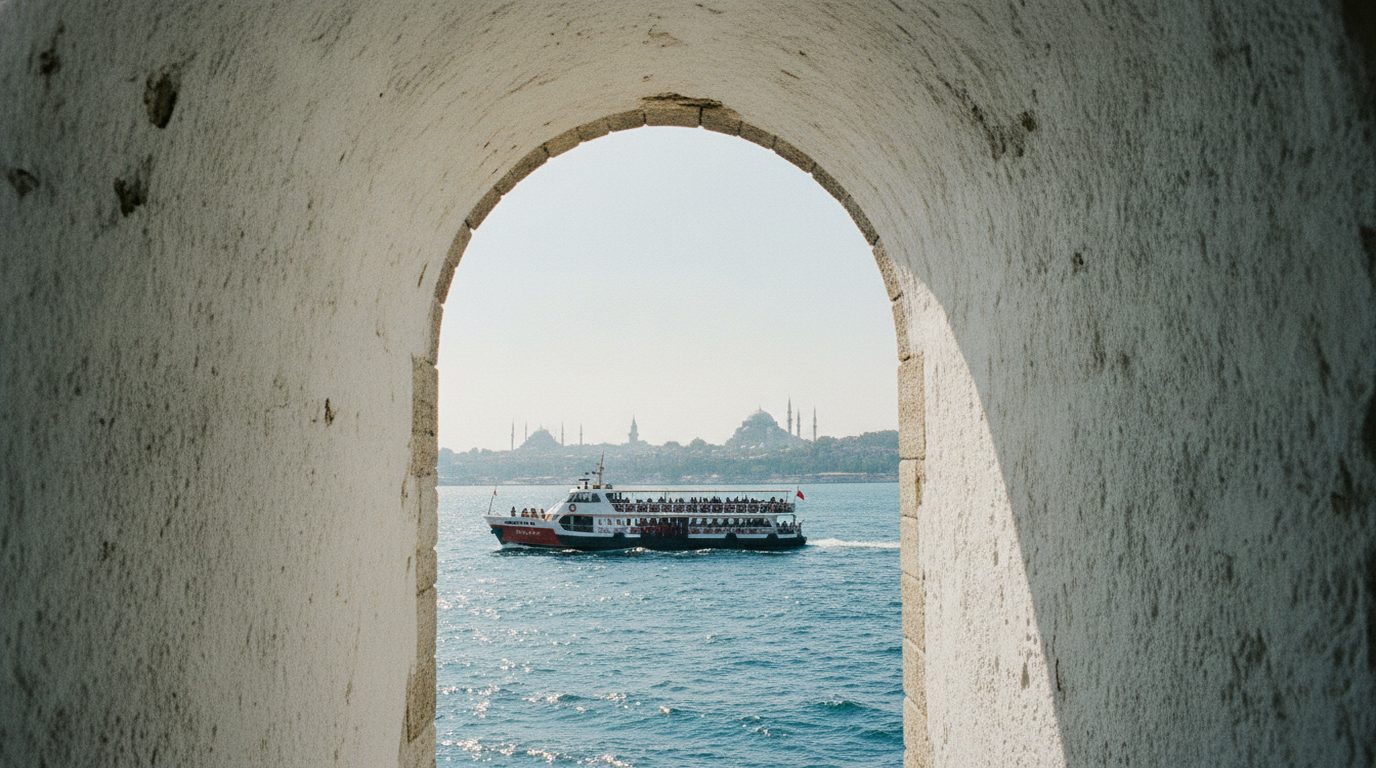
The view from an embrasure
A deep arched window frames blue water, a passing passenger boat and the hazy old-city skyline beyond.
One of the pleasures of the interior is the way the windows work as frames rather than mere openings. The deep whitewashed embrasure holds the moving water, passing boats and the old-city skyline in a single view, giving even small rooms a sense of reach. Architecturally, these thick walls belong to the current tower — a stone rebuild of 1725, with the familiar silhouette shaped in 1832–33 under Mahmud II.
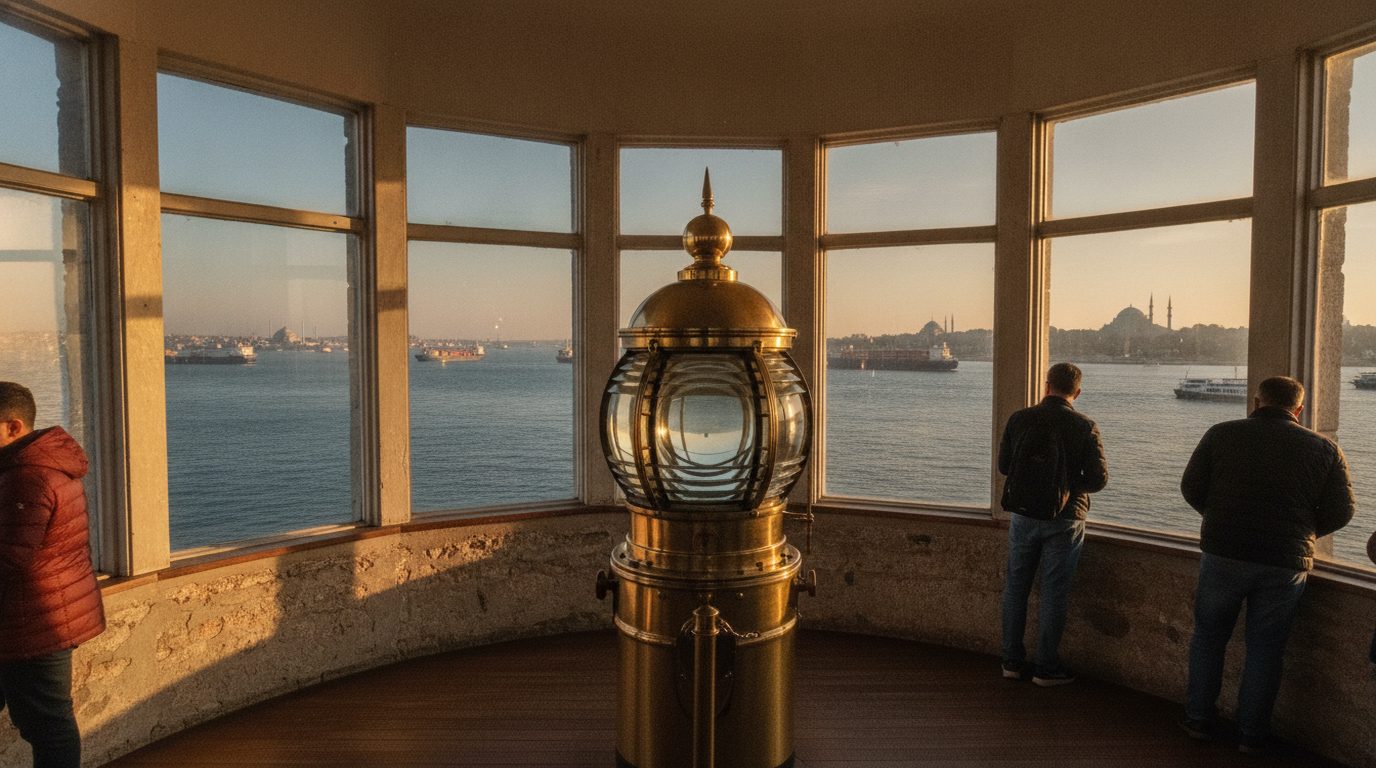
The lantern gallery
At the top, visitors circle the glazed gallery around the old brass lighthouse lantern as ships pass below.
At the top, the experience changes from enclosed rooms to a bright ring of glass around the old brass lighthouse lantern. Visitors tend to slow down here, circling the gallery for different angles on the Bosphorus, the shipping lanes and the domes and minarets across the water. It is usually the last stop of the route — the walk through it all is on our inside-the-tower guide.
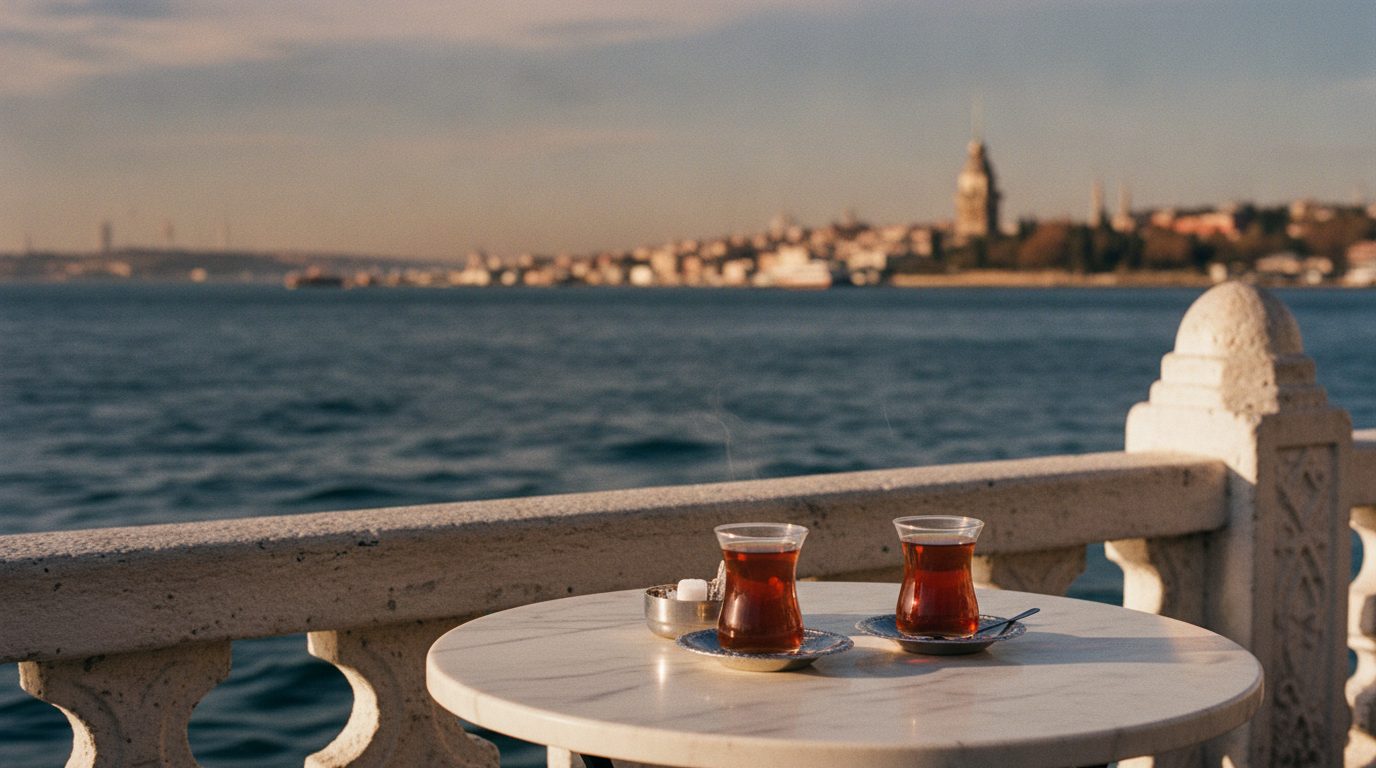
Tea on the Salacak shore
Shore-side çay on the Salacak waterfront, the tower across the water — the classic before-or-after ritual.
This is shore-side tea in Salacak, not the daytime café on the islet itself. It is a useful reminder of the tower's setting: the Maiden's Tower stands about 200 metres offshore, and the museum visit begins with the short boat crossing from Salacak. That crossing takes roughly five minutes and is included with admission, so many visitors pause for a tea here before or after heading over.
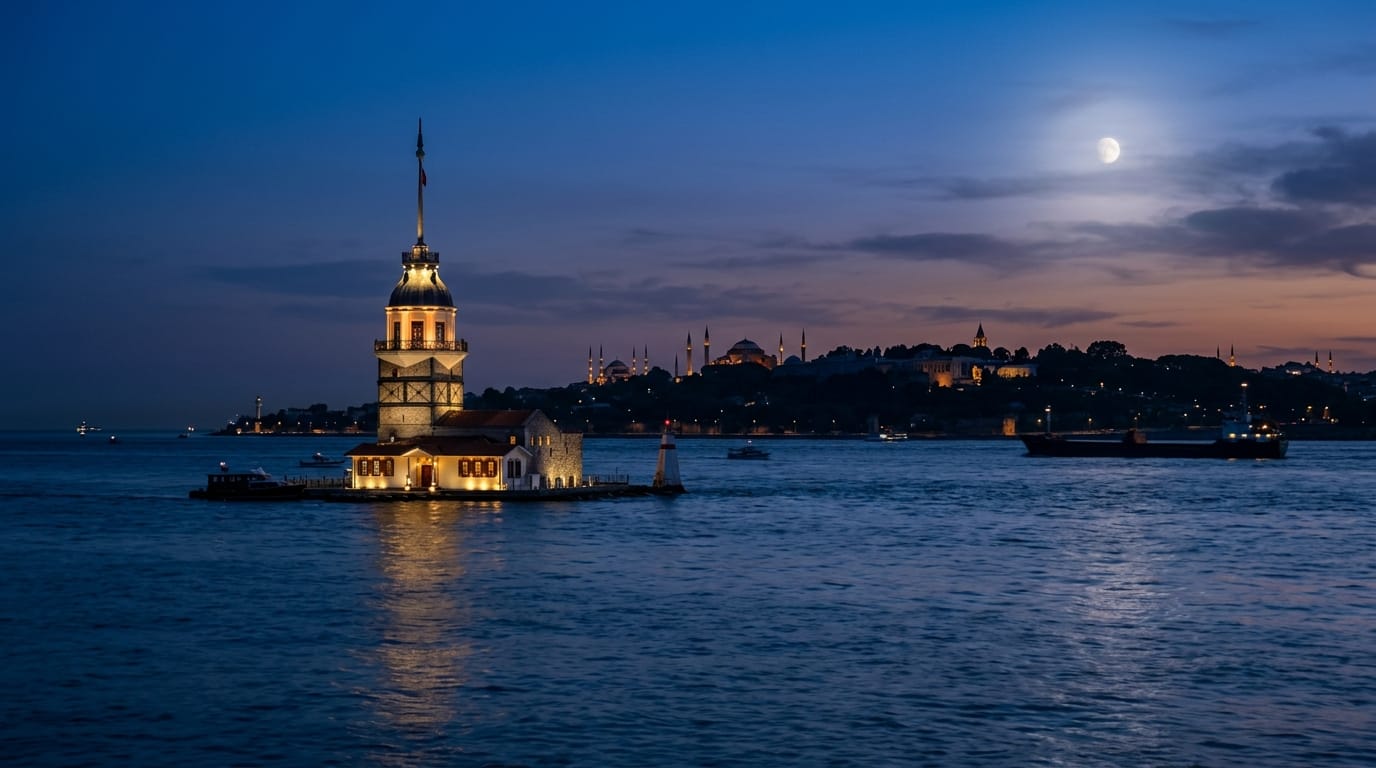
The tower and the city
The wide shot: the Maiden's Tower in the strait with the old-city skyline — domes, minarets, Topkapı's point — stacked behind it.
From the rocks south of the pier, toward Harem, the composition every photographer wants lines up: tower off-centre, skyline behind, shipping lights threading between. It is also the view that explains the tower's 2,500-year job description — whoever held this rock watched every ship that mattered.
Seeing it in person
Photographs are kind to the Maiden's Tower, but they miss the two things that make it: motion and scale. The strait never holds still — tankers, ferries and gulls re-compose the frame every minute — and the tower reads far more intimate from the islet than any lens suggests. Photography is welcome everywhere on the visit, terrace and lantern gallery included. For the stories behind these images, start with the legend and the history — and for what awaits up the stairs, inside the tower; for the logistics, how to get there and plan your visit — and if you're chasing the golden-hour frames, our sunset guide maps the shoreline spot by spot.